
A few years ago, a “bad communicator” in the workplace usually meant someone who interrupted meetings, gave awkward presentations, or forgot to reply to emails.
Today, it can mean losing a client because your message sounded cold.
Or accidentally creating six hours of confusion because your Slack update was too vague.
Or making your entire remote team panic because you typed:
“Can we talk?” …and then disappear for three hours.
That’s the strange thing about online work. The internet didn’t remove communication from work. Instead, it made communication the work.
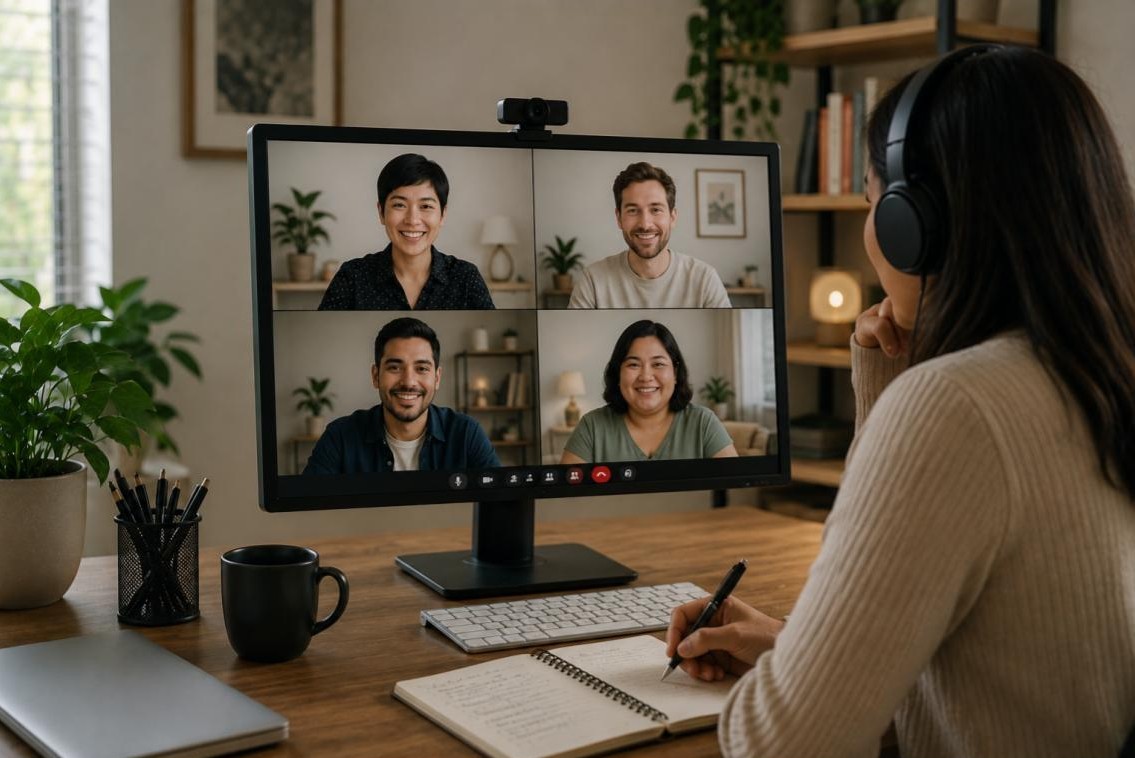
For remote teams, freelancers, virtual assistants, outsourcing companies, and online businesses, most collaboration now happens through screens. No facial expressions. No body language. No quick office clarifications. Just messages, calls, comments, notifications, and assumptions.
And because of that, communication skills suddenly matter a lot more than people expected.
That might sound dramatic until you realize how common this has become. A 2026 workplace communication study highlighted by Atlassian found that 87% of employees regularly waste work hours clarifying unclear messages, while 83% reported problems caused by misunderstood tone or wording online.
The Internet Removed Context
In a physical office, people naturally pick up context. You can hear someone’s tone. You can see if they’re stressed, joking, confused, or busy. You can walk over and ask quick questions before small misunderstandings become expensive ones.
Online, all of that disappears.
A short message that sounded efficient in your head can come across as angry. A delayed reply can accidentally look passive aggressive. A vague instruction can send someone down the completely wrong path for an entire afternoon.
That’s why online communication requires more intentionality than in-person communication ever did.
People often assume remote work is mainly about technical skills:
- knowing the software
- hitting deadlines
- completing deliverables
- staying organized
But in reality, remote work runs on clarity. The people who explain things clearly, ask good questions, provide updates, and reduce confusion often become the easiest people to work with.
And in online work, being easy to work with matters a lot.
Good Communication Saves Time
A lot of people think communication is “soft skill” territory. In reality, poor communication is often a productivity problem.
One unclear message can delay an entire workflow. One misunderstood task can create hours of revisions. One missing detail can force multiple people into unnecessary meetings trying to figure out what happened.
This becomes even more important in outsourcing and remote environments where teams may be spread across different countries, cultures, and time zones. For example, if someone in the Philippines sends work to a client in Australia, who forwards it to a manager in the US, every unclear instruction creates friction. That friction costs time, money, and trust.
Strong communicators reduce that friction. They clarify expectations early. They give proper updates. They explain problems before they become emergencies. In many online workplaces, that skill is just as valuable as technical ability.
Tone Has Become a Professional Skill
One of the weirdest side effects of online work is that people now have to learn how to “sound human” through text.
That sounds obvious until you realize how much workplace communication now happens through:
- Slack
- Teams
- Discord
- Project management comments
- Voice notes
Without tone, people fill in the blanks themselves.
A simple “Okay.” can sound annoyed.
A short reply can sound dismissive.
A delayed response can feel personal even when it isn’t.
That’s why emotionally intelligent communication matters more online. The best remote workers are usually not the loudest or most charismatic people. Often, they’re the people who know how to communicate clearly without creating unnecessary tension.
Sometimes that means over-explaining slightly. Sometimes it means adding context. Sometimes it means recognizing that another person cannot read your intentions through a screen. And this is understandably difficult for most people because online communication forces people to become more deliberate.
Technical Skills Alone Are No Longer Enough
This is becoming increasingly obvious in freelance and outsourcing industries.
Two people can have the exact same technical ability, but the better communicator usually gets retained longer.
Clients trust people who keep them informed. Managers rely on people who proactively update them. Teams value coworkers who make collaboration easier instead of harder.
A highly skilled worker who constantly creates confusion becomes stressful to manage. Meanwhile, someone with slightly less experience but excellent communication often becomes indispensable because they reduce uncertainty. This is especially true for:
- virtual assistants
- project coordinators
- content and copywriters
- customer support teams
- designers
- developers
- marketers
- remote operations staff
- freelancers handling international clients
In many remote workplaces, communication skills directly influence the team’s entire performance.
Remote Work Changed What “Professional” Looks Like
For a long time, professionalism was associated with offices, formal speech, and polished presentations.
Online work changed that. Now, professionalism often looks like:
- replying clearly
- updating people without being chased
- asking smart questions early
- documenting information properly
- knowing how to explain problems calmly
- understanding digital etiquette
- avoiding unnecessary confusion
In many remote companies, the people who rise fastest are not always the most technically brilliant people in the room. They are often the people who make online collaboration feel smoother, calmer, and more reliable. That matters more than ever because modern work is increasingly digital, asynchronous, and distributed.
The Real Challenge of Online Communication
The hardest part is that online communication feels deceptively easy.
Typing is easy. Messaging is easy. Sending updates is easy.
But communicating well online is surprisingly difficult because so much interpretation happens silently inside the other person’s head. People now have to think about all of the below behind a screen:
- clarity
- tone
- timing
- responsiveness
- structure
- context
- professionalism
- cultural differences
- digital etiquette
That’s why communication skills are no longer just “nice to have” in remote work environments. They’ve become infrastructure. The smoother communication becomes, the smoother everything else becomes too.
RF-Tech’s Approach to Remote Communication
At RF-Tech, communication in a fully remote environment is something we take seriously because we’ve seen firsthand how much it affects workflows, collaboration, and trust across teams. Over time, we’ve learned that strong online communication is not something teams simply “figure out” automatically. It’s an ongoing process that requires clarity, accountability, patience, and continuous improvement from everyone involved.
Like many remote teams, we’re still learning and refining how we work together digitally. But one thing has become very clear: smoother communication usually leads to smoother workflows, better collaboration, and fewer unnecessary problems across the board.
A lot of the habits that improve online communication are actually simple. The challenge is staying consistent with them, especially in fast-moving remote environments where messages, tasks, and conversations happen across multiple platforms every day.
Here are a few practices that have helped us navigate online communication more effectively as a remote team:
10 Simple Ways to Improve Online Communication
- Be clear instead of overly brief
Short messages save time until they create confusion later.❌ “Can you fix this?”
✔️ “Can you update the homepage banner image and resend it before 3 PM?” - Give context whenever possible
Don’t assume everyone has the same information you do.❌ “The client didn’t like it.”
✔️ “The client liked the design overall but wants the text larger for mobile users.” - Ask questions early
Clarifying something early is better than fixing mistakes later.❌ Stays silent for two days while confused
✔️ 1 day before the due date “Just confirming before I proceed: should I prioritize the blog graphics or the ad creatives first?” - Avoid disappearing during important conversations
Even a quick update helps reduce uncertainty.❌ “I’ll handle it.” (goes offline all day)
✔️ “I’m still working on this. I’ll send an update in about an hour.” - Use updates proactively
Good communication often means people don’t need to chase you for status updates.❌ Waiting until the deadline to mention delays
✔️ Immediately after realizing the task my require more time “Team, quick update: I may need an extra day because revisions took longer than expected.” - Match the urgency to the message
Not every issue needs an “ASAP.”❌ “URGENT ASAP PLEASE REPLY” on a routine report
✔️ “No rush on this. Whenever you have time today is fine.” - Read messages twice before sending
Tone can easily change through text.❌ “Why didn’t you do this?”
✔️ “Hey, just checking if this task is still in progress?” - Document important decisions
Verbal calls are helpful, but written records prevent confusion later.❌ “I thought someone already mentioned that.”
✔️ “Just documenting this here so everyone’s aligned moving forward.” - Respect time zones and workloads
Remote work often means people are working different schedules and environments.❌ Sending repeated follow-ups after 10 minutes
✔️ “No worries if you’re offline right now. Just reply when you’re available.” - Focus on solving problems, not assigning blame
Clear and calm communication keeps teams productive during stressful moments.❌ “Who messed this up?”
✔️ “Let’s figure out where the issue started so we can fix it properly.”
Final Thoughts: The People Who Communicate Well Will Stand Out Faster
As online work continues growing, communication skills will likely become even more valuable, not less. AI can automate tasks. Software can streamline workflows. But clear, thoughtful communication is still one of the biggest things separating efficient teams from chaotic ones.
Especially in remote work, people remember the coworkers, freelancers, and team members who make collaboration easier instead of more stressful. Because at the end of the day, most online work problems are not caused by technology, they’re caused by teams misunderstanding each other through a screen.