
You have probably seen the viral Reels.
A clean desk. A laptop on a stand. A second monitor showing a perfectly organized calendar. A mechanical keyboard making satisfying clicking sounds. ASMR, right? And then – a small lamp glowing in the corner. Maybe there is an “aesthetic” plant, a strategically-placed coffee cup, and a chic drawer that somehow contains every charger known to humanity.
Then comes the slow camera pan, usually accompanied by calm music and a caption like “a productive day working from home.”
Work setup content has become its own corner of the internet. People post desk tours on TikTok, share home office inspiration on Pinterest, upload detailed setup videos on YouTube, and discuss keyboards, monitors, chairs, lighting, and cable management in online communities.
Some setups are practical. Others look like they belong in a tech showroom. Either way, people can’t seem to stop watching them.
So, why has the work setup become such a big part of internet culture?
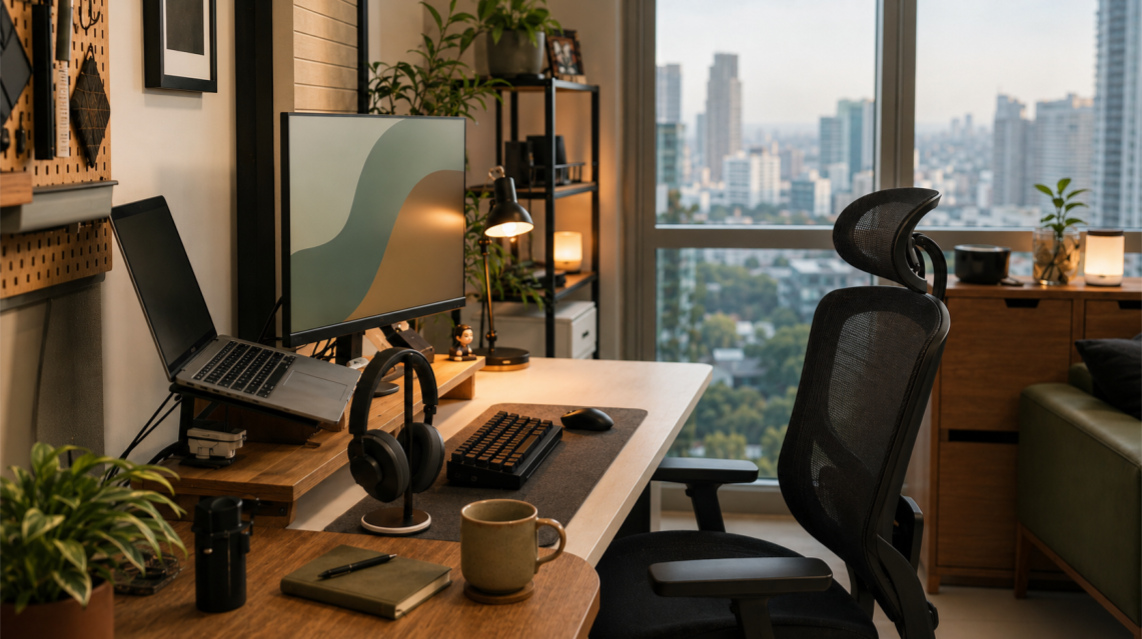
Our Desks Have Become Part of Our Daily Lives
For office workers, a desk used to be something provided by an employer. You might add a photo, a mug, or a small plant, but most of the setup had already been decided for you.
Remote work changed that.
Suddenly, workers had to decide where and how they would spend their working hours. Dining tables became temporary offices. Bedrooms gained desks. Spare rooms became Zoom backgrounds. People began buying monitors, office chairs, laptop stands, keyboards, ring lights, and anything else that could make working from home a little easier.
Years later, remote and hybrid work remain a regular part of working life. Gallup’s workplace data from February 2026 shows that among U.S. employees with remote-capable jobs, 52% work in a hybrid arrangement and 26% work exclusively remotely. Only 22% work fully on-site.
When people spend several days a week working from home, their workspace naturally begins to matter more. The desk is where they answer messages, join meetings, solve problems, meet deadlines, and sometimes eat lunch when the day becomes too busy.
After enough time, the setup starts to feel personal.
A Work Setup Can Feel Like a Form of Self-Expression
Look closely at desk setup videos and you will notice that very few desks look exactly the same.
Some people prefer warm lighting, wooden accessories, plants, and neutral colors. Others build gaming-inspired spaces with colorful lights, multiple screens, and matching devices. Some want an almost empty desk. Others surround themselves with books, figurines, artwork, sticky notes, or family photos.
The setup tells you something about the person before they even appear on camera.
This is one reason workspaces perform so well online. They combine several types of content people already enjoy: technology, interior design, organization, productivity, and personal style.
Even color choices have become part of the conversation. Pinterest’s 2026 color predictions include bold shades such as Cool Blue, Jade, Plum Noir, Wasabi, and Persimmon, reflecting a broader interest in expressive spaces rather than completely neutral interiors.
A workspace gives people a small area they can shape according to their taste, even when the rest of the house is shared with family members or roommates. One corner can feel entirely theirs.
The Internet Loves a Good Transformation
Desk setup content also follows a format that social media platforms love: the before-and-after transformation.
The “before” might show tangled cables, an old chair, poor lighting, and a laptop sitting directly on the table. A few seconds later, the same space has a desk mat, monitor arm, matching accessories, softer lighting, and cables hidden neatly out of sight.
The transformation feels satisfying because the improvement is immediate and easy to see.
There is also something calming about watching someone organize a workspace. Every item gets a place. Every wire disappears. Every device seems to work together perfectly.
Real workdays rarely feel that organized.
Tasks change. Messages arrive unexpectedly. Internet connections fail. Meetings run longer than planned. A tidy desk offers a small sense of order when the work itself feels unpredictable.
That sense of control may be one of the strongest reasons people become attached to their setups.
A Workspace Can Help Signal “Work Mode”
A dedicated setup can also serve a practical purpose. It helps the brain recognize that it is time to work.
Remote workers do not have the usual physical transition of leaving home, commuting, entering an office, and sitting at an assigned desk. Their workday may begin only a few steps away from the bed.
Sitting down at a specific workspace can become a replacement for that transition. Turning on the desk lamp, connecting the laptop, putting on headphones, or opening a planner can help create a mental start-of-day signal.
The same space can also help contain work. When the laptop is closed and the desk light is switched off, the worker has a clearer cue that the day is finished.
That boundary continues to be important. The 2026 Remote Work Well-Being Survey found that 69% of remote workers said their work-life balance had improved during the previous 12 months. At the same time, 44% reported working longer hours from home.
A well-designed workspace cannot solve every boundary problem, but it can make the beginning and end of the workday easier to recognize.
Comfort Becomes Important After Several Hours
Some setup upgrades are mainly about appearance. Others can change how someone feels after a full workday.
A laptop placed too low can encourage a person to look downward for hours. A chair without enough support can contribute to discomfort. Poor lighting may cause eye strain. A cluttered desk can make it harder to find the tools needed for a task.
This is why many remote workers eventually invest in items such as:
- An adjustable chair with proper back support
- A laptop stand or monitor placed closer to eye level
- An external keyboard and mouse
- Better lighting
- A footrest
- Headphones for calls or focused work
- Storage that keeps frequently used items within reach
These upgrades may seem small, but their effect becomes more noticeable when someone works at the same desk five days a week.
The most useful setup is usually the one that supports the person’s actual routine. Someone who attends video meetings all day may prioritize good lighting and a reliable headset. A designer may need a larger monitor. A writer may care more about a comfortable keyboard and a quiet corner. A worker dealing with frequent power interruptions may value backup power more than matching accessories.
Productivity Content Makes Setups Look Aspirational
Work setup videos rarely show only the desk.
They often show the lifestyle around it: waking up early, making coffee, writing in a planner, working through a focused task list, exercising, preparing a healthy lunch, and finishing the day with time to spare.
The desk becomes a visual shortcut for an organized and productive life.
Watching this content can be motivating. It can encourage someone to clean their workspace, improve their routine, or take their work more seriously. The problem begins when the setup itself starts feeling like a requirement for success.
A person can have an expensive desk and still struggle with deadlines. Someone working from a simple table can still produce excellent work. Productivity depends on habits, communication, skills, expectations, and the ability to follow through.
A beautiful workspace may support those things, but it cannot replace them.
There Is Always One More Upgrade
Work setups are also ideal for recommendation culture.
Once someone buys a desk, they may want a better chair. Then a monitor. Then a monitor arm. Then a keyboard that sounds better. Then a desk mat that matches the keyboard. Then lights to make the background look better during meetings.
Social platforms make it easy to discover another product that promises to make work more comfortable, organized, or productive. This can turn workspace improvement into an endless project. There is always another gadget, accessory, or trend to try.
For remote workers, especially those just beginning their careers, it helps to separate genuine needs from online inspiration. A reliable computer, stable internet connection, comfortable working position, and quiet environment usually matter more than decorative accessories.
A good setup can be built gradually. Workers can begin with the problem that affects them most and improve from there.
If neck pain is the issue, raising the screen may help. If meetings are difficult because of background noise, a better headset might be the priority. If the desk is always cluttered, simple storage may make a bigger difference than buying another device.
The Verdict: Your Workspace Does Not Have to Look Like the Internet
The most popular desk setups online are designed to be seen. Your workspace needs to support the way you work.
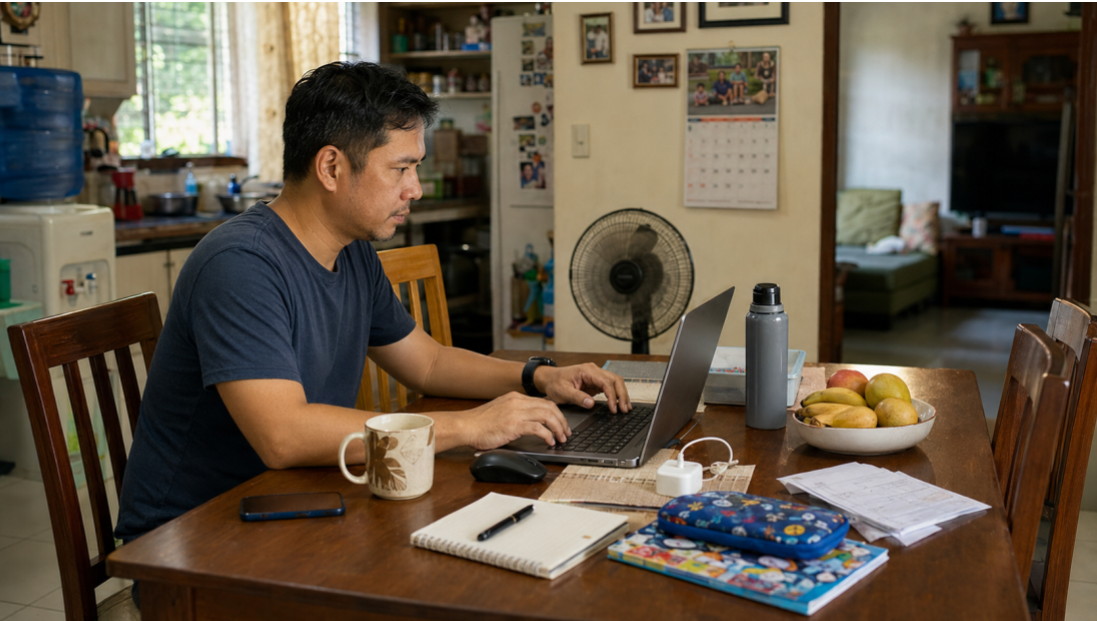
That may mean using an old table that happens to be the right height. It may mean keeping documents within reach instead of hiding everything for a cleaner photo. It may mean working near a window, sharing a room with a family member, or moving to another part of the house when the surroundings become noisy.
Many Filipino remote workers are creating workspaces within homes that serve several purposes. Space may be limited. Internet equipment may need to stay in a particular area. Family routines may affect where quiet work can happen. Power reliability, ventilation, heat, and background noise can matter as much as desk design.
A realistic workspace responds to those conditions.
The goal is to create a place where you can concentrate, communicate clearly, and finish your work without feeling physically uncomfortable. It can still be attractive and personal, but it does not need to look like a viral desk tour.
The Work Setup Obsession Makes Sense… But It Doesn’t Have To Be Your Reality
Work desks once brought to mind your Lolo’s heavy desk tucked inside a stuffy private office, usually surrounded by paperwork and firmly off-limits. Today, a workspace could be a dedicated home office, a carefully styled corner, or simply one end of the dining table cleared before the workday begins.
People are interested in work setups because the desk now represents several things at once. It is a place to earn a living, build a career, express personal style, and create a small sense of control within a busy home and an unpredictable working world.
For remote workers, it can become the physical centre of their professional life.
That does not mean everyone needs multiple monitors, expensive accessories, or perfectly hidden cables. The best work setup is the one that fits the worker, the job, the available space, and the budget.
If it helps you focus, stay comfortable, and close the laptop at the end of the day, it is already doing its job.
What does your current work setup look like, and what is the one upgrade you would genuinely find useful? Share your answer with RF-Tech on Facebook or get in touch with the team. We’d love to hear about it.