
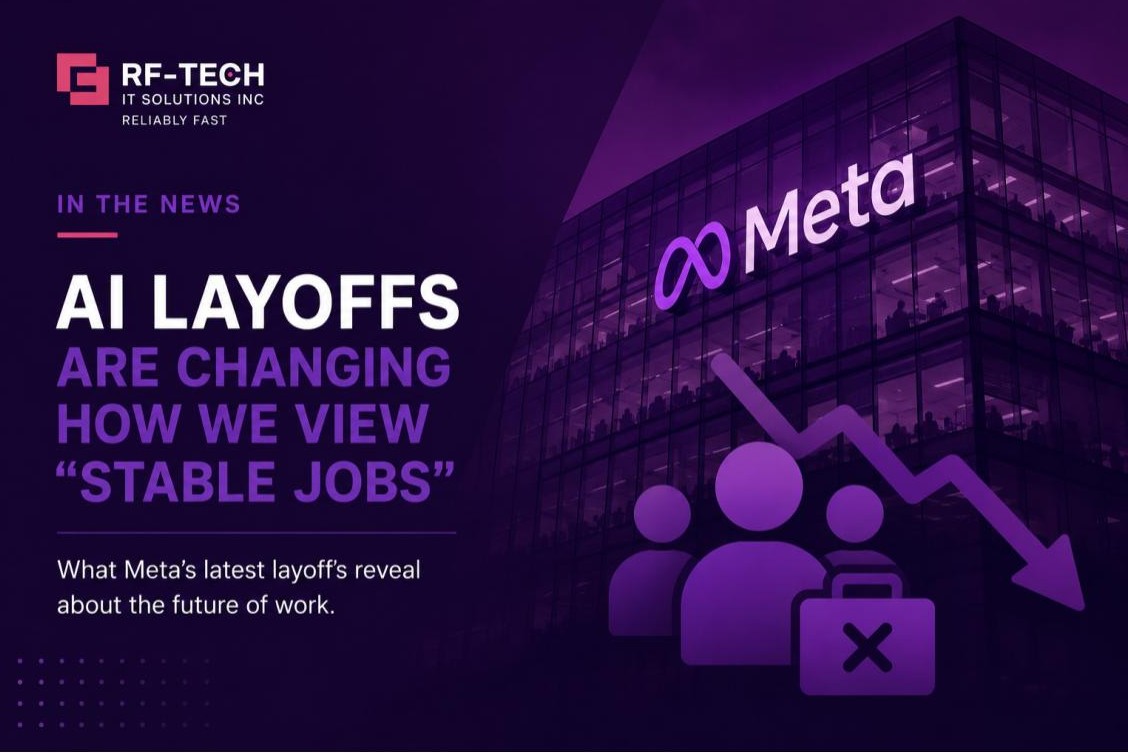
When reports surfaced that Meta employees were asked to work remotely ahead of another major round of layoffs, the internet reacted the way it usually does during moments like this: with anxiety, memes, frustration, and a growing sense that the future of work is shifting faster than people expected. According to reports, Meta’s latest restructuring efforts could affect thousands of employees as the company continues pushing heavily into AI development and operational efficiency.
For years, tech jobs were viewed as some of the safest and most desirable careers available. High salaries, flexible work arrangements, strong benefits, and the promise of long-term growth made the industry feel almost untouchable.
Now, even some of the biggest companies in the world are restructuring around AI.
And people are paying attention.
This Feels Different From Previous Layoffs
Tech layoffs are not new. The industry has always gone through cycles of rapid hiring followed by corrections. But what makes the current wave feel more unsettling is how closely AI is tied to the conversation.
Companies are not simply cutting costs anymore. Many are actively reorganizing workflows around automation, AI-assisted productivity, and leaner teams. Some businesses are openly discussing how AI tools can reduce the need for certain operational roles or compress workloads that previously required entire departments.
That changes how people emotionally interpret layoffs.
The fear is no longer just:
“The economy is bad right now.”
Now it becomes:
“What happens if technology permanently changes how much human labor companies need?”
That question feels much more personal.
The Idea of a “Stable Career” Is Changing
One of the biggest effects of these layoffs is psychological. Younger workers especially are starting to rethink what career stability actually means. Watching highly skilled employees lose jobs at globally dominant companies has weakened the old belief that working for a prestigious corporation automatically guarantees long-term security.
As a result, more people are beginning to prioritize:
- flexible work,
- multiple income streams,
- freelancing,
- remote opportunities,
- adaptable digital skills,
- and career paths that are less dependent on one employer.
Ironically, AI may not just be changing jobs. It may also be changing how people define success and stability altogether.
Companies Are Moving Faster Than Workers Can Emotionally Process
Part of what makes this moment so uncomfortable is the speed. AI tools are evolving incredibly fast. Companies are racing to integrate automation into workflows because the competitive pressure is enormous. Businesses that slow down risk falling behind competitors who move faster, operate leaner, and automate more aggressively.
That pressure creates a kind of global corporate arms race. At the same time, workers are still emotionally trying to process what these changes actually mean for their futures. Many people are not necessarily afraid of technology itself. They are afraid of uncertainty:
- uncertainty around job demand,
- uncertainty around career longevity,
- uncertainty around whether skills learned today will still matter five years from now.
That uncertainty is what makes conversations around AI feel so emotionally charged online.
AI Is Not Eliminating the Need for People Entirely
Despite the panic surrounding layoffs, it is important to avoid turning every AI discussion into a dystopian prediction.
Most industries still rely heavily on human decision-making, oversight, communication, strategy, creativity, and emotional intelligence. AI may speed up workflows, automate repetitive tasks, and reduce certain operational demands, but many companies are also looking for workers who know how to adapt alongside new technology instead of resisting it completely.
In many ways, the demand is shifting rather than disappearing. Skills like:
- communication,
- adaptability,
- systems thinking,
- organization,
- research,
- project coordination,
- and digital operations
… are becoming increasingly valuable in AI-assisted workplaces.
The people who thrive moving forward may not necessarily be the ones competing directly against AI, but the ones learning how to work effectively with it.
Final Thoughts: Maybe People Are No Longer Chasing Permanence
For a long time, career success was built around permanence. One company. One path. One predictable definition of stability.
Now, work feels more fluid than ever.
Meta’s recent layoffs are not just another tech headline. They reflect a larger shift happening across industries as businesses reorganize around AI, automation, and rapidly changing digital workflows.
The bigger question now may not be whether AI will continue reshaping work. It already is. The real question is whether people, companies, and entire industries can adapt thoughtfully enough to keep up with the pace of change.
What do you think about the future of work and AI? Feel free to connect with RF-Tech on Facebook or get in touch: https://rftechitsolutions.com/contact/ . We’d love to hear your perspective.