
It is 8:47 p.m. Your laptop is already closed, dinner is on the table, and you are technically finished for the day.
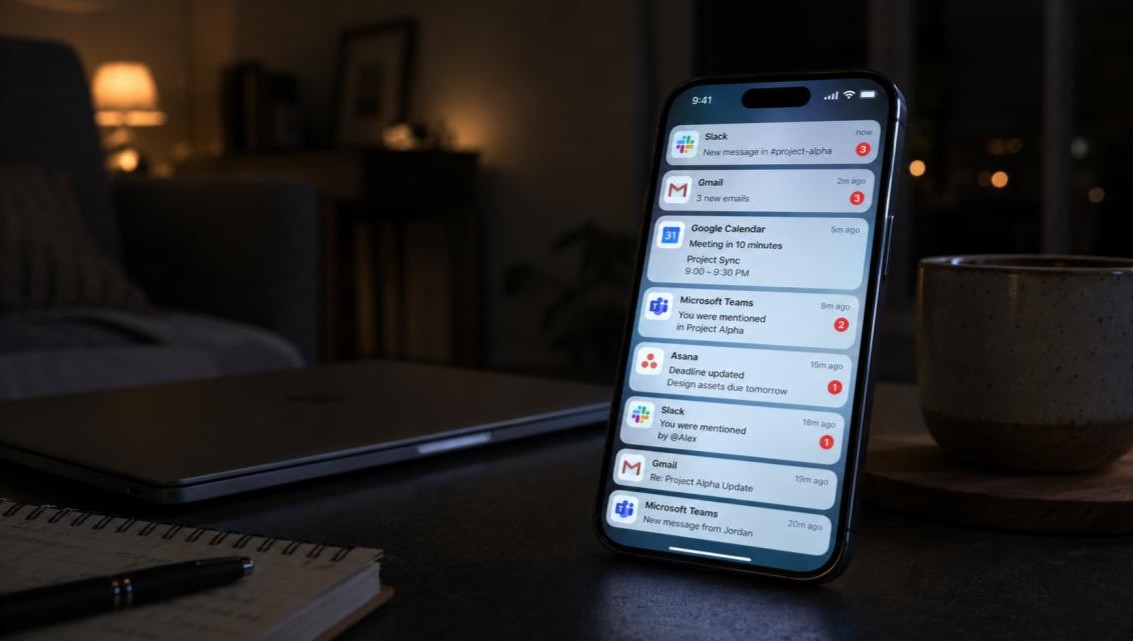
Then your phone lights up.
It could be a message from your manager, a client asking a quick question, or a notification from the team group chat. Nobody has said you need to respond immediately. Still, you open it.
Now, even if you don’t really want to, you’re thinking about work again.
For many remote workers, this has become a normal part of daily life. Work apps stay on the same phones we use to talk to family, watch videos, pay bills, and relax. A single notification can bring us mentally back to work long after the official workday has ended.
Remote work gives people greater flexibility, but it has also created an uncomfortable question: when everyone can reach you at any time, when are you truly allowed to be offline?
How Being Available Became Part of the Job
In a traditional office, availability was easier to understand. You arrived, completed your workday, and eventually went home. A manager could see when you were at your desk, and your commute created a natural separation between work and personal time.
Remote work removed many of those physical signals. As a result, online activity has become a substitute for physical visibility. The green status beside someone’s name may suggest that they are available. A quick reply may look like commitment. Staying active in a group chat can make someone appear involved and dependable. Over time, remote workers may begin to feel that they need to remain visible to prove they are working.
This is sometimes called digital presenteeism. It happens when workers feel pressure to appear constantly active online, even when that activity is no longer helping them produce better work.
Nobody Has to Say It Out Loud
The pressure to stay online is not always written in a company policy but it can develop through small habits and unspoken expectations. Even a message that says “no rush” can create pressure when it arrives at 10 p.m. The receiver has already seen the notification. They may start thinking about how to respond, whether the matter is urgent, and whether waiting until morning will make them appear unreliable.
Eventually, people begin to understand the pattern.
Recent research shows how common this feeling has become. A July 2026 study reported that 49% of workers feel a constant expectation to remain available, while 27% worry that failing to respond outside working hours could harm their careers.
That is a powerful fear, especially for workers trying to build trust, earn a promotion, secure another contract, or prove themselves in a remote role.
Flexibility Can Quietly Turn Into Constant Availability
Remote work is often described as flexible, and in many ways, it is.
Workers may have more control over where they work. They can avoid long commutes, spend more time near family, and manage personal responsibilities more easily.
However, flexibility can become difficult when it has no clear limits. A worker may step away in the afternoon to attend a school event, then feel obligated to work late into the evening. Someone may complete personal errands during a quiet hour, then keep checking messages throughout dinner to show they are still available.
For Filipino remote workers, time zone differences can add another layer of pressure. A worker supporting a client in Australia, Europe, or the United States may receive messages outside their usual local schedule. Even when they are not expected to reply immediately, seeing a message from a client can create a sense of urgency.
The workday begins to stretch longer than it should be.
A 2026 remote work well-being survey found that 44% of remote workers reported working longer hours from home. At the same time, 69% said their work-life balance had improved.
Both experiences can be true. Remote work may give someone more freedom while also making it harder to recognise when the workday is over.
The Green Status Does Not Tell the Whole Story
One reason online status creates so much pressure is that it is a poor measure of productivity.
Someone can appear active while completing very little. They may move between messages, meetings, emails, and notifications without having enough uninterrupted time to finish their most important work.
Another person may appear offline while drafting a report, reviewing data, solving a technical problem, or concentrating on a task that requires their full attention.
Good work often happens away from the team chat.
When companies place too much importance on immediate responses, workers learn to prioritize visibility. They may interrupt focused work to answer a message, keep applications open to maintain their status, or respond before they have enough information to give a useful answer.
This creates a workplace where everyone looks busy, but fewer people have the time and mental space to do their best work.
Every Notification Creates a Small Decision
A work notification may seem harmless. It takes only a few seconds to read. The real interruption often lasts longer.
Once a worker sees a message, their attention shifts. They need to decide whether to reply now, reply later, look for more information, or leave the message unread. Even if they return to what they were doing, part of their mind may remain on the new request.
This becomes exhausting when it happens throughout the day and continues into personal time.
An IU study published in May 2026 found that 81% of respondents checked their devices at least once an hour, even without receiving a notification. One-third of employees felt obligated to remain available outside working hours, and more than half wished they could spend more time offline.
The pressure can also affect sleep, family time, hobbies, and the ability to rest. Someone may stop actively working but continue checking their phone throughout the evening. Physically, they are at home. Mentally, they are still waiting for the next message.
Reliability Does Not Require an Immediate Reply
Remote workers need to be dependable. Teams rely on people to communicate, meet deadlines, flag problems early, and respond within a reasonable period. But reliability can exist without constant availability.
A dependable remote worker might:
- Keep their working hours visible to the team
- Respond within an agreed timeframe
- Communicate before stepping away during an important project
- Update tasks so others can see what has been completed
- Raise delays before they become larger problems
- Explain when they will be available again
- Use scheduled status updates instead of remaining online all day
These habits create trust because they give the team useful information. A green status alone cannot do that.
Workers can also protect their personal time through small practical changes. Turning off non-essential notifications, removing work apps from the home screen, setting a clear end-of-day routine, and keeping work devices out of the bedroom can make it easier to step away.
Boundaries work best when they are communicated rather than silently assumed. A simple message such as “I’m logging off now and will pick this up first thing tomorrow” helps set an expectation without sounding uncooperative.
Managers Shape the Culture More Than Policies Do
Companies can create an official right-to-disconnect policy, but everyday behaviour will still determine whether workers feel safe using it.
If a manager regularly sends late-night messages, praises people for working during leave, or expects instant responses, employees will notice. A policy document will offer little reassurance if the team’s actual habits communicate something different.
Managers can help by:
- Defining expected response times for each communication channel
- Reserving instant messages for genuinely time-sensitive matters
- Using scheduled-send features for messages written outside working hours
- Making it clear when a task can wait until the next shift
- Respecting annual leave, rest days, and sick days
- Measuring performance through quality, deadlines, and results
- Discussing workload before overtime becomes routine
- Modelling healthy offline behaviour themselves
Teams also need a shared definition of urgency. A system outage may require immediate attention. A routine update for next week probably does not. When those distinctions are clear, workers can switch off without wondering whether they are missing something important.
Staying Online Is Great But Being Offline Is Part of Sustainable Remote Work
The ability to work from anywhere should not mean carrying work everywhere.
Remote teams still need communication, accountability, and responsiveness. They also need people who are rested enough to think clearly, solve problems, and produce work they are proud of.
Constant availability can make someone look committed for a while. Over time, it can weaken concentration, increase stress, and make even simple work feel heavier.
The healthiest remote work cultures allow people to be present during their working hours and genuinely step away when those hours are finished. That kind of boundary supports better work, stronger relationships, and careers that people can sustain.
Do you ever feel pressure to reply to work messages after hours? Connect with RF-Tech on Facebook or get in touch with the team. We’d love to hear how you manage the pressure to stay online.